
June 2026: Translating Libya
Masoud Masoud takes us on a tour of the Libyan lit scene
Curated by Masoud Masoud
The Libyan literary and publishing scene has been multiply fractured by colonial invasion and occupation, autocracy and isolation, and civil war and the struggle for power. And yet incredible writers have appeared, among them globally acclaimed authors like Hisham Matar and Ibrahim al-Koni, but also so many more: Najwa Bin Shatwan, Mohamed Alnaas, Kawthar Al-Jahmi, as well as many others discussed below. In this month’s newsletter, Masoud Masoud takes us through the Libyan literary landscape: publishing houses, prizes, festivals, and emerging writers.
Alongside the continuous presence of established authors, the past decade has seen an emergence of a new generation of literary voices within Libyan literature, increasingly making itself heard in the wider Arab literary scene. What makes this development especially significant is the writers’ explorations of different themes related to Libya — whether reflecting on its current reality or revisiting recent history — thereby enriching and expanding the Libyan social and cultural imaginary. Yet, despite these steady efforts, a long-term, government-funded project supporting the publishing and literary scene has not yet evolved to match the scale and significance of their contributions.
Publishers interested in rights, longer samples, or contacting writers can message us at info@arablit.org.
-M. Lynx Qualey
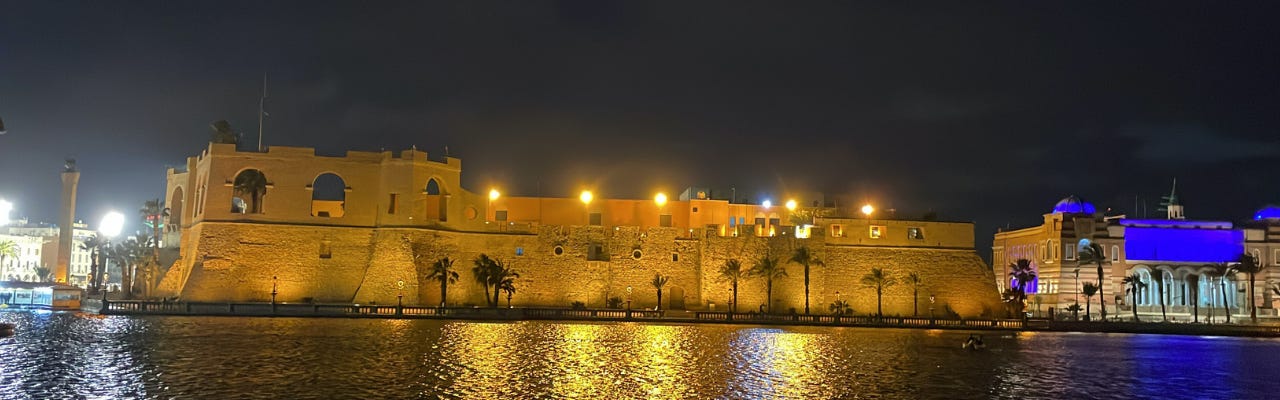
Libyan Publishing Houses
Dar Al-Fergiani
Founded in Tripoli in 1953, Dar Al-Fergiani is one of Libya’s most established publishing houses and booksellers. In 1970, it expanded its operations to Cairo, followed by the establishment of its London branch, Darf Publishers, in 1981. The company also operates three bookshops in Tripoli, which serve as key distribution centers for its own publications as well as a wide selection of Arabic and international literature. Dar Al-Fergiani specializes in Arabic translations of literary works connected to Libya’s political, cultural, and social history, including memoirs and historical accounts by influential figures. The publishing house is also dedicated to promoting literary works by Arab and Libyan authors, with particular emphasis on emerging voices in the contemporary Libyan literary scene, such as Kawthar Al-Jahmi and Mohamed Alnaas.
Reach out through their website and Facebook page.
Dar Al Rowad
Dar Al Rowad is a Tripoli-based publishing house and a bookstore established in 1990. Over the years, it has played a significant role in publishing works of Libyan writers across a wide range of genres, including academic studies, cultural writings, history, and literature. It continues to maintain a consistent presence in the Libyan publishing scene and regularly participates in local and regional book fairs.
A notable work published by them is the Arabic translation of the French novel “Les ombers de Ghadamès“ (The Shadows of Ghadames), written by French journalist Joëlle Stolz. The novel offers a fictionalized account inspired by the author’s visit to the city of Ghadames and her fascination with its unique architecture and social life dynamics.
Dar Al Rowad can be reached through their Facebook page.
A note about publishing in Libya:
Publishing with a Libyan publisher improves a book’s accessibility within Libya, and yet it can make distribution outside the country a challenge, except during regional book fairs such as the Cairo International Book Fair, where Libyan publishers often participate. Conversely, authors who publish with broader Arab publishers may benefit from greater regional exposure, while their books often reach Libyan bookstores slowly due to distribution limitations. Another challenge is the limited purchasing power of readers in Libya, as imported books tend to be more expensive because of currency conversion and added profit margins. Alternatively, interested readers are frequently left to secure books through personal arrangements.
Libyan Book Fairs
In the current landscape, literary events and author gatherings in Libya are driven largely by local non-for-profit cultural organizations, especially as major events such as the Tripoli Book Fair have remained inactive for years. Nevertheless, recent initiatives have sought to revive the country’s book-fair culture, including the Public Prosecution Book Fair, (sponsored by the Public Prosecutor’s office) which has been taking place for the past two years and has attracted participation from Libyan and Arab publishing houses. Many consider these efforts an encouraging step toward rebuilding cultural life after years of conflicts, while others maintain that such initiatives should be led and organized by the Ministry of Culture.
Acclaimed and Emerging Libyan Authors
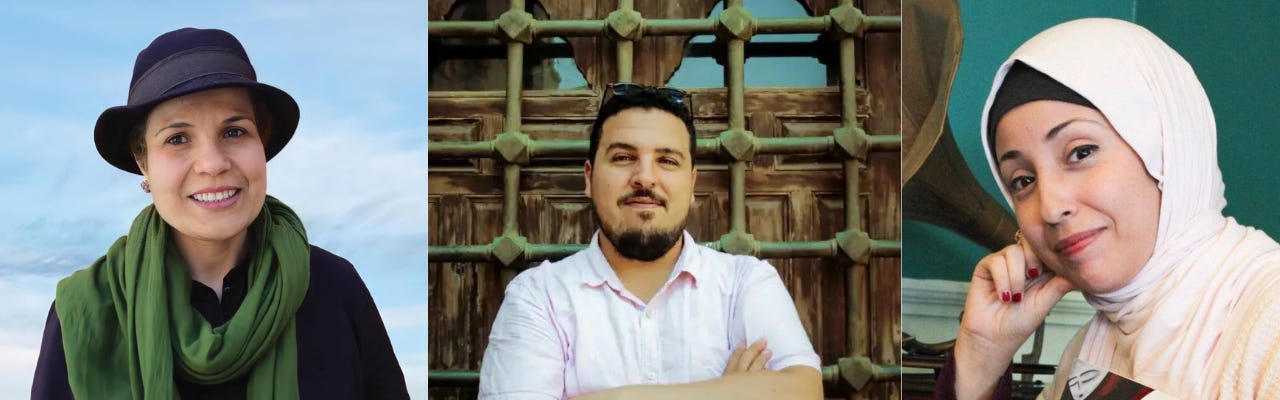
While the world already knows acclaimed authors Hisham Matar and Ibrahim al-Koni, there are many more Libyan authors yet to be published to a broad global audience. Here are a few you should know:
»Najwa Bin Shatwan«
Najwa Bin Shatwan is one of Arabic literature’s most distinctive literary voices. Writing across genres—including novels, short stories, essays, plays, and memoir—she approaches each work with a new style and thematic lens, while consistently centering the question of human existence. Her novel (زرايب العبيد) The Slave Yards, which was published in Arabic ten years ago and has been translated to English by Nancy Roberts, marked a distinctive milestone in the history of Libyan literature: it was the first Libyan novel to be shortlisted for International Prize for Arabic Fiction (IPAF) in 2017. The novel sheds light on the history of slavery in Libya during the Ottoman era. Another translation of her work, by Sawad Hussain, is the wild and surreal short-story collection (كتالوج حياة خاصة) Catalogue of a Private Life, which reflects the reality of dictatorship and its profound impact on Libyan society in the aftermath of the revolution. Through powerful imagery and layered symbolism, the stories explore themes of resistance and resilience, hunger and the deeply human desire to forget the war. The book won an English PEN Translates grant in 2019 and was published by Dedalus Books in 2021. In the extraordinary 2019 collection (صدفة جارية) An Ongoing Coincidence, Bin Shatwan’s satiric writing style shines, crafting a work that is both humorous and deeply moving in its portrayal of Libya’s political situation and armed conflicts since 2011. Many of the stories in the collection have been translated to English but the full collection remains unpublished. The 2021 novel (روما تيرمني) Roma Termini, translated to Italian, is set in contemporary Rome and explores migration from Eastern to Western Europe through the voice of a young Ukrainian woman. While it falls within the literature of migration and social critique, it also blends Bin Shatwan’s dark comedy with human tragedy. Her novel (وبر الأحصنة) Horses Hair revisits the story of Adam and Eve at the very moment they descend to Earth—specifically to the land of Libya—where they attempt to build a new life taking readers on a dazzling, fantastical journey, blending myth, reality, and history through the narration of an unborn child. The 2022 novel (كونشيرتو قورينا ادواردو) Concerto Qurina Eduardo shortlisted for the IPAF in 2023, traces Libya’s recent social and political history from the 1970s to the present. Her 2025 memoir, (عني) About Me, explores how education, family, home, society, and culture have influenced and shaped her. Finally, her 2026 novel (شجرة الصابون) Tree of Soap presents a striking vision of a government maybe a little too eager to encourage free expression and active democratic participation among its citizens.
You can read an excerpt from Najwa’s latest novel, Tree of Soap, on ArabLit in Nassim Barakat’s translation.
You also can–and should–read Najwa’s wild and award-winning short stories in translation:
Stories from “An Ongoing Coincidence”:
“The Sharp Bend at Al-Bakur” - winner of 2019 ArabLit Story Prize
Other stories:
»Mohammed Alnaas«
Mohamed Alnaas—the first Libyan writer to win the International Prize for Arabic Fiction for his extraordinary debut novel Bread on Uncle Milad’s Table—is another of the leading voices in contemporary Arabic literature. His writing is distinguished by lyrical, emotionally nuanced prose that explores themes of identity, memory, masculinity, vulnerability, and authority, while reflecting on Libya’s social and political transformations and the intricate relationship between individuals and society. Alnaas gained wide recognition after winning the International Prize for Arabic Fiction in 2022 for his first novel Bread on Uncle Milad’s Table; the English translation by Sawad Hussian is set for publication this October by HarperVia. His latest work الرحيل إلى الجنة Leaving for Paradise, was published by Dar Al-Fergiani earlier this year; it takes the reader to the painful time period of the Italian colonization of Libya, tracing atrocities and the devastating impact of fascist displacement through the journey of a young boy named Jaballah.
Also, translator Nashwa Nasreldin is at work on Alnaas’s The Fight in Jahanaam. She tells us:
Mohammed Alnaas’s novella, The Fight in Jahannam, is a satiric retelling of fictional events our narrator claims took place in the 1990s, during Muammar Gaddafi’s de facto rule, in a small, Libyan village named Jahannam (literally translated as Hell). The villagers descend into conflict after the warring leaders and their respective factions fail to release their grip on power. Resembling an Arab folkloric tale that would traditionally be narrated by a hakawati (Arab storyteller), the book is rich with black humour and references to politics, playing too with the concept of literature and the ‘rules’ of narration.
Also read Olivia Snaije in conversation with Alnaas and his French translator:
On an Award-Winning Novel & the Unstable Literary Scene in Libya
On Translating a Novel of ‘Profound Gentleness in a Violent Milieu’
Contact info@arablit.org to get in touch with Alnaas or his translators.
»Kawther Al-Jahmi«
Kawther Al-Jahmi is one of Libya’s leading novelists and short story writers. Her writing style demonstrates a keen sense of the nuances of Libyan social life, decoding terms and exploring the social meanings and implications attached to them. The Returnees (عايدون)— is an example of a Libyan social term she notably used as the title of her first novel which was published by Dar al-Saqi in 2019 as the recipient of the Mai Ghoussoub Award for Debut Novels. Al-Jahmi’s works examine the deeply rooted social stereotypes that shape individuals from an early age. Through her stories, she maintains a strong connection to the social realities in Libya, capturing the subtle details of the social dynamics in a way that also reflects the country’s broader political and economic conditions. She has published three novels: (عايدون) The Returnees in 2019, (العقيد) The Colonel in 2022, and (ولد بلاد) A Son of the Country in 2024; in addition to a short-story collection published in 2020: (حي القطط السمان) Fat Cats Neighborhood. Her story (طرابلس المحروسة، 1785) Tripoli the Protected 1785 won first place in Fezzan Foundation’s Story Award in 2017. She is also an editor in Fasila - فاصلة, an online platform dedicated to nurturing emerging Libyan writers.
A Son of the Country revolves around Majdi and his family; his father, Rashid, is a Moroccan who fled his country after a conflict with police in 1976 and found his way to Tripoli, where he marries his boss’s disabled sister Moufida. When they have children, the issue of their children’s documentation comes to the fore, as Rashid cannot secure his own paperwork, and Libyan law doesn’t allow Libyan women who marry foreigners to pass their citizenship to their kids. To make it worse, Rashid dies, leaving Moufida—with the help of her brothers—to take care of the two kids. We follow these characters from 1990s to 2000s and then to 2011 and the years that followed, including wars, armed conflicts, and hopes that the law would change, since the two children are considered stateless: neither Libyan nor Moroccan. The novel poses a question about identity: is it a piece of paper, or a sense of belonging? You can read an excerpt from her novel A Son of the Country (ولد بلاد) on ArabLit in Alaa Alqaisi’s translation.
In conversation with the author:
Kawthar Al-Jahmi’s Journey: From ‘Bint Tripoli’ to Award-winning Novelist
More of her writing:
An excerpt from her novel The Colonel was published on Words Without Borders.
The Most Beautiful Moments of the Journey, on road trips to Benghazi
*
We’ll also note that, in our series “women writers recommend women writers,” novelist Aisha Ibrahim particularly recommended Kawthar’s work, saying, “Kawthar Al-Jahmi is a Libyan novelist whose narrative advantage lies in her ability to consciously immerse herself in the issues of Libyan society, its transformations, and its ideological struggles, both old and contemporary. She presents it in a neutral and creative language that is more like a challenge, because everything she presents is sailing through a thorny and highly complex landscape–but she arms herself with striking intelligence and a vast store of knowledge.”
More Libyan Authors You Should Know
1. Ahmed Yousef Aghila is a storyteller, blogger, and researcher of folklore, widely recognized for his distinctive short-story writing. He has published numerous short-story collections as well as several works documenting Libyan heritage and folklore. In 2025, the Ahmed Aghila Prize for Short Story was established to encourage, support, and bring to the spotlight the work of emerging young writers.
2. Aisha Ibrahim is considered one of the most promising emerging voices in the contemporary Libyan literary scene. She has published a collection of short stories titled The World Ends in Tripoli in 2019, in addition to three novels: (قصيل) Qusayl 2016, (حرب الغزالة) The Gazelle’s War 2019, and her 2022 novel (صندوق الرمل) The Sand Box. Her work has received regional recognition, with The Gazelle’s War and The Sand Box being longlisted for IPAF in 2020 and 2023 respectively. Christiaan James is currently at work translating her صندوق الرمل. Publishers interested in an excerpt can reach out to info@arablit.org.
3. Azza Maghur is a short-story writer who also runs a library where children participate in various activities including reading & storytelling. She is also a lawyer known for defending political prisoners, advocating for NGO rights, and openly calling for a constitution in Libya.
She has written five short-story collections. One notable example of her work is the short story collection (30 قصّة من مدينتي) Thirty Stories from Tripoli, particularly the story A Cup of Tea, which follows Nouriya, a woman whose life mirrors that of many Libyan housewives, entirely devoted to caring for her husband, Al-Sadiq, as she spends her days cooking and preparing his daily afternoon cup of tea. Suddenly, cancer quietly spreads through her body. Unnoticed by her husband and overshadowed by the demands of domestic life, Nouriya’s suffering remains invisible as she slowly deteriorates and ultimately dies, highlighting the often-overlooked sacrifices and struggles of women confined to traditional caregiving roles. (Read a review of the collection.)
Her latest work (سِفرُ الغابة: يومياتي في غابات كندا الثلجية) Book of Forest: My Diaries in Canada’s Snowy Forests, is a collection of 48 diary entries written between 2019 and 2021 when she lived in Ottawa, Canada. Through reflections on nature, life, alienation, and nostalgia, she connects her experiences in Canada with memories of her homeland. The book also features photographs taken by the author, capturing the beauty and diversity of the Canadian landscape.
Read: “Mowgli and Shere Khan,” translated by Safa Elnaili and “The Leaf,” translated by Safa Elnaili.
Publishers interested in reaching out to any of these authors can contact info@arablit.org.
Read These Libyan Modern Classics
Ahmed Fagih is best known in the Arab literary world for his trilogy; however, I would like to highlight and strongly recommend two of his other works (both translated to English), as they offer valuable insight into Libya and the social changes it underwent over a long period of time.
Homeless Rats (فئران بلا جحور) Faqih considered it close to his heart as he witnessed the experience as a ten-year-old child. The story follows a tribe through the wheat harvest season in a village south of Tripoli during the 1940s; shedding light on life in Libya at the time and recounting the suffering of Libyans from poverty and hunger. I personally consider it a hidden Libyan literary gem. (Read a review.)
Maps of the Soul (خرائط الروح), considered the longest Arabic novel (12 parts), it follows the rise story of “Othman Al-Habashi” during the time of the Italian occupation of Libya. (Read a review.)
Anthologies of Libyan Literature
Anthologies in English
Translating Libyan: In Search of The Libyan Short Story is a good introduction to anyone interested in reading translated Libyan Literature, as it provides a glimpse of Libya through short stories written by authors from different decades across the vast geography of the country.
Banipal 40 - Libyan Fiction: This excellent 2011 magazine-issue anthology is one of Banipal’s best, with work by big writers like Ahmed Fagih and Hisham Matar but also lesser-known writers (there’s a wonderful short story by Omar el-Kiddi, translated by Robin Moger).
Anthologies in Arabic
Sun on Closed Windows (2017) شمس على نوافذ مغلقة
Published in 2017 as a collaborative project between the Arete Foundation for Arts and Culture and Darf Publishers, this anthology brings together poems, short stories, novel excerpts, and essays by twenty-five young Libyan writers. However, the collection became the subject of public controversy on social media after excerpts from “Khashan” by Ahmad al-Bokhari were deemed explicit. The debate ultimately overshadowed the contributions of the other writers and undermined the anthology’s original aim of drawing attention to emerging literary voices.
Restoration: Art as a Means of Resistance and Recovery (A Collection of Stories by Young Writers) (2023) - ترميم: الفن كوسيلة للمقاومة والتعافي
This book is a narrative anthology that raises several issues experienced by Libyans in the past decade. Its strength lies in the diversity of its texts in terms of artistic forms, language, and themes.
Album Libya: Stories and Pictures from Libya, 2023 ( ألبوم ليبيا)
This book is like a love letter to Libya, bringing together personal photographs and stories from 84 Libyan writers, poets, artists, and intellectuals. These stories, appearing in English translation alongside the original Arabic text , offer a different perspective on Libya, which has long been portrayed in Arab and international media from a purely political standpoint, focusing on oil, dictatorial rule, and the struggle for power.
You can also find it in English at https://albumlibya.ly/en/.
Room 211 - غرفة 211
Room 211 is a periodical published by Arete Foundation for Arts and Culture:
Anthology: Shortlist Stories from Kamel Maghur Short Story Award First Edition, 2025 - قصص القائمة القصيرة لجائزة كامل المقهور للقصة القصيرة - الدورة الأولى
Libyan Literary Prizes & Grants
The Kamel Maghur Short Story Award is named after the late Libyan author Kamel Maghur, a pioneer of the short-story genre in Libya. Established in 2024, the award aims to encourage short-story writers in Libya by showcasing their work, expanding its reach among readers and potential publishers, and providing a platform that recognizes literary achievement in the field. Since its launch, the award has held two editions, attracting a total of eighty-three submissions in 2024 and 113 submissions in 2025, reflecting the growing vitality of Libya’s literary scene. The winner of the award receives a cash prize of 2,000 Libyan dinars, while the writers of the five other shortlisted stories are each awarded 500 Libyan dinars. In addition, all shortlisted stories are published in a special anthology produced by the award in collaboration with a publishing house.
2024 Winner:
“Children of The Wind” by Ismail Al-Qaidi
2025 Winner:
“Seller of Time” by Ahmed Ali Al-Fakhri
Arete Foundation for Arts and Culture:
Arete is a nonprofit Libyan organization dedicated to supporting, mentoring, and facilitating artistic creativity and cultural exchange in Libya and neighboring countries.
Its “Professional Libyan Novel Grant Project” aims to empower a new generation of writers in Libya by supporting their creative projects at the early stages of their careers. Grant recipients work closely with members of the judging panel over a period of approximately nine months to develop and complete their novels. In addition, each recipient receives a grant of 10,000 Libyan dinars.
Notable recipients and works produced through the grant include:
Kawthar Al-Jahmi, for her novel (ولد بلاد) A Son of the Country published by Dar Al-Fergiani in 2024;
Restoration (ترميم): Art as a Means of Resistance and Recovery — a collection of stories by young writers published by Dar Al-Fergiani in 2023;
Mohamed Alnaas;
Yaqin Al-Anaqar, for her novel (قلب يجر صخرة) A Heart Dragging a Rock published by Dar ElAin in 2026.
A final note from Masoud:
These suggestions are mostly from my readings and what I have enjoyed over the years, thus; the list is more of a personal take rather than an all-encompassing expert piece on Libyan literature. I hope that, as I continue reading more Libyan literature—particularly works by new authors—the list of recommendations will continue to grow.
And a final editor’s note: Ok, well, we would be hard-pressed to find a broader and better look at Libyan literature, so thank you, Masoud. And thanks to all those who are supporting this work financially; we encourage those publishing professionals making use of this newsletter to put a coin in the (metaphorical) jar.
*
Masoud Masoud is a business graduate with a background in wealth management. He is passionate about business and the intersection between literature and publishing. His fascination with the world of literature inspired him to found @Libyan_Readers (on Instagram) & Libyan Readers - القرّاء الليبيّون (on Facebook) both dedicated to sharing his love of reading and highlighting the work of Libyan writers.