
May 2026: Translating Oman
A Look at the Omani Literary Scene
Introduction by M Lynx Qualey; selections curated by Sharifah Alhinai. Photos courtesy Sharifah Alhinai.
While other genres have been written in Oman for more than a millennium (poetry in particular), Abdullah Mohammed Al-Taie’s The Angels of Green Mountain (1965), was the first Omani novel. And it was several decades later, according to Omani novelist Bushra Khalfan, that the first novels with artistic intent began to appear, starting with a book by Badria Al Shihhi in the late 1990s. What’s more, according to internationally acclaimed novelist Jokha Alharthi, even short stories — so popular in other Arab countries in the late nineteenth and twentieth centuries — only began being written in Oman in the 1980s.
But then, quite abruptly, Omani prose exploded, not just locally, but onto the regional and international scenes. At the recent “Translating Oman” literary evening sponsored by Syracuse University Press, novelist Bushra Khalfan talked about her own slow—and then sudden—literary trajectory. Born in 1969, she started writing in the 1990s, but published her first novel (the acclaimed The Garden, forthcoming in translation September 2026) in 2016. Her International Prize for Arabic Fiction-shortlisted Dilshad came just a few years later.
Translation of Omani literature was also dormant — and then explosive. The first Omani novel translated to English was Abdulaziz Al Farsi’s Earth Weeps, Saturn Laughs in 2013 (translated by Nancy Roberts), and no full-length poetry collection or memoir has yet been translated, outside of Sayyida Salma bint Said Al Said’s (known as Emily Reute) Memoirs of an Arabian Princess.
The second to appear was Jokha Alharthi’s Sayyidat al-Qamr (Celestial Bodies, tr. Marilyn Booth) in 2018, which was the surprise 2019 winner of the International Booker. In the last few years, translations of novels and short-story collections by Jokha Alharthi, Zahran Alqasmi, Huda Hamed, Mohammed Alyahyai, Hamoud Saud, Bushra Khalfan, and others have begun to impact the English-language landscape.
Indeed, this translation has played an important role in Oman as well: Khalfan pointed to Marilyn Booth and Jokha Alharthi winning the International Booker as an essential turning point for Omani literature, one that brought further confidence to the Omani literary scene.
Below, find more recommendations of Omani literature for translation from our translators and partners, and then a brief look at important Omani literary landmarks from curator and Sekka magazine founder Sharifah Alhinai. Gratitude to Sharifah, also, for the beautiful photos.
Also, an important note for publishers: Omani authors can apply to the Omani Ministry of Culturefor translation funding.
-Marcia Lynx Qualey
Omani Prose to Translate
Marilyn Booth Recommends
قوانين الفقد (The Laws of Loss) by Mazen Habeeb
The Laws of Loss is a collection of five interconnected short stories that provide keenly rendered portrait of childhood. Each begins with a law of mathematics or physics and brings it into relation with life. This book won the 2026 Bait AlGhashm Dar Arab International Translation Prize.
Marilyn also recommended Jokha Alharthi’s short-story collection ليل ينسى ودائعه.
Nashwa Nasreldin Recommends
مدخل جانبي إلى البيت (Side Entrance to the House) by Amal Alsaeedi
Nashwa writes: “Side Entrance to the House is a wonderful work by the Omani writer Amal Alsaeedi in which the author’s old family house serves as a vehicle to unearth recalled memories and images of childhood and youth, those memories triggering philosophical reflections on her troubled relationships with her husband, parents and siblings.”
She adds: “Amal Alsaeedi is a rare voice from the Gulf, who writes fresh, imaginative, relatable musings, from a perspective rarely heard in Arabic literature, let alone in translation, which tells us more about the realities of modern life in a still-exoticized region, than many bestsellers. This is a book that deserves to be placed on the shelves alongside popular western autofiction. Daring and adventurous, her writing opens up new modes of thought and plays with form to make for a gloriously satisfying read.”
You can read an excerpt in The Common and another that appears today on ArabLit.
Editor’s note: Amal also just won a grant for The Cultural History of the Grocery Store, a “reflective long-form text that weaves together autobiography and collective memory in Oman, tracing the transformation of the grocery store from a symbol of consumption into a space of fracture and confession. Through a female body burdened with heritage, and a family grief that stretches from the mountains to the sea, the text shapes a personal Omani history of loss.”
Alice Guthrie Recommends
دِلْشَاد (Dilshad) by Bushra Khalfan
This book won the Katara Prize and was shortlisted for the International Prize for Arabic Fiction in 2022. Alice Guthrie writes: “Beyond the boring Gulf bling all too familiar to European audiences, along the coast towards the Indian Ocean, lies the richly textured tapestry of Omani history, so intimately entwined with subcontinental and East African threads. Just across the water from the Mumbai of “Midnight’s Children” — a location Khalfan’s beautifully woven narrative encompasses — we are moved to both laughter and tears by the eccentrics dancing across the pages of this uniquely local yet universal novel of love, loss, family, and fate.”
Read an excerpt on the LEILA website.
Bushra Khalfan recommends:
Bushra recommends short-story collections by Suliman al-Mamari, Mazen Habeeb, Hamoud Saud, Mahmoud al Rahbi, Yahya Salam, Asma al-Shamsi, Huda Hamed, Jokha Alharthi, and Mohammed Alyahyai.
Jokha Alharthi recommends:
When asked back when she won the International Booker, Alharthi particularly recommended Zahran Alqasimi’s novel, جوع العسل (Honey Hunger), which is now in beautiful English translation by Marilyn Booth. She also recommended checking out works by Sulaiman al-Maamari, Bushra Khalfan, Huda Hamed, and Azhar Ahmed, adding, “and many others.”
Zia Ahmed recommends:
Mohamed Alyahyai’s The War — the book recommended by Zia Ahmed — comes out in Christiaan James’s translation next month from Dar Arab. Alyahyai also has out a new book this year, حواليس, which spans from the late 19th century to the 1990s, reexamining Omani history.
A Look at the Omani Landscape by Sharifah Alhinai
Omani Poetry to Translate
Aisha Al Saifi: Born in the old city of Nizwa, Al Saifi is one of Oman’s most decorated poets, who made history when she became the first woman to win the celebrated Prince of Poets Competition. Her poetry, which she began to publish in local newspapers in 2005, centers on themes of womanhood, love and grief. Although a few of her poems have been translated into English already and published in Words Without Borders, Asymptote Journal and Sekka, it would be noteworthy to see more of her poetry, and collections of her work (of which there are four), reach wider audiences through translation.
You can read poems by Al Saifi here.
Imam Said bin Ahmad Al Busaidi: In addition to serving as the Imam (ruler) of Oman in the 18th century AD, Al Busaidi was an eloquent poet. His most famous poem is “Ya Man Hawah A’azahu Wa Athalany” (also known as “Ya Bakhelan Bel Wasl”). Its poignant words, which express the sorrow caused by a lover’s betrayal, has been sung across time by various Arab singers, including Kuwaiti singer Awadh Al Dukhi, Syrian singer Adeeb Al Dayikh and Egyptian singer Abdulrahman Mohamed, among others, moving millions of Arab hearts. Its universal theme will appeal to readers globally and across generations.
Listen to one of his poems on YouTube.
A Newly Awarded Short Story Collection I’m Looking Forward to Reading
La Bara Fe Chicago by Mahmoud Al Rahbi: Al Rahbi is a novelist and author known for his short story collections, and his advocacy for the short story form. His short story collection Sa’at al-Zawal won the Sultan Qaboos Award for Culture, Arts and Literature in 2012, and his most recent one, La Bara Fe Chicago, won the Al Multaqa Prize for Arabic Short Stories (dubbed the “Oscar” of awards for Arabic short stories) last February. Written in Arabic, the fourteen stories of La Bara Fe Chicago are described as exploring the themes of loss, grief and the journey of letting go of the weight of abandonment through an array of characters, from a fisherman to a migrant.
A Rising Publishing House and Literary Prize
DarArab: DarArab is an independent publishing house that was established in 2017 to amplify contemporary Arabic literature and translate fiction, poetry and autobiographies for English-speaking audiences worldwide. Its mission is to revive and preserve Arabic literary heritage while fostering cross-cultural dialogue between the Arab world and the Western world through storytelling and translation. DarArab has published the work of numerous Omani authors, such as Younis Al Akhzami and Badria Al Shihhi, as well as authors from the wider Arab region, including Bothayna Al Essa and Shahd Al Shammari, and translators such as Roger Allen.
Every year, DarArab, in partnership with the Bait Al Ghasham Foundation, presents the Bait AlGhasham DarArab International Translation Prize, worth a total of £70,000. The prize consists of three categories: a prize for an unpublished translation of a published Arabic literary work, a prize for an unpublished Arabic literary work and a prize for a published Omani literary work. Past winners have included Marilyn Booth and Katherine Van De Vate.
Noteworthy Omani Bookstores
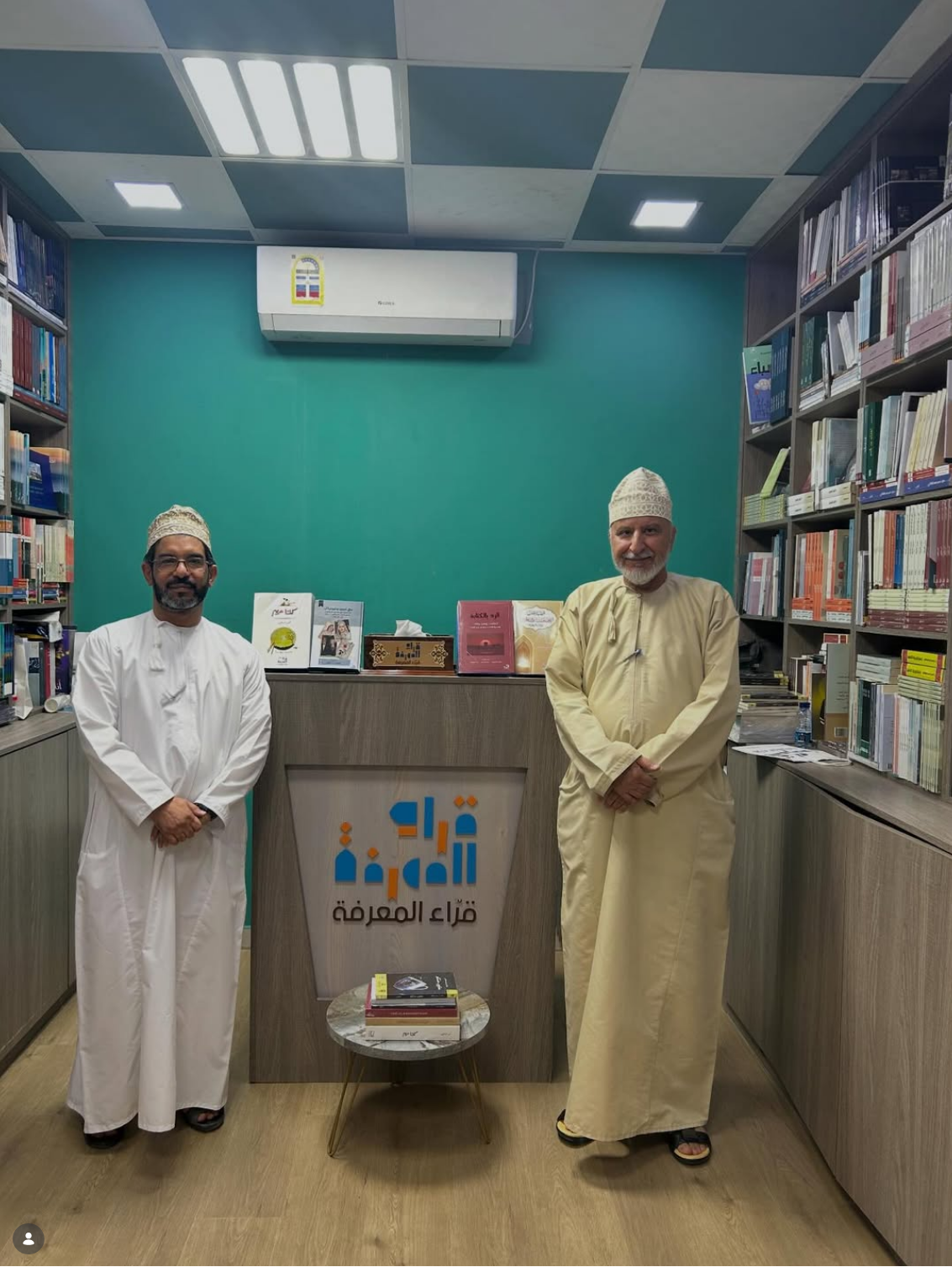
Qura Al Maerifa: Nestled in a quiet residential neighborhood in Ghala, Muscat, Qura Al Maerifa is a cozy independent bookstore that specializes in Omani literature and literature relevant to Omani readers. It was founded during the pandemic by Ibrahim Al Salti, who manages the bookstore himself, thoughtfully guiding readers to books best suited to their interests and helping them discover new worlds. The bookstore also regularly organizes literary events, from talks to panel discussions, bringing Omani writers, and writers from the Arab world, together. Their books can also be ordered online on qalmaerifa.net and find their instagram at @qalmaerifa.
Rawazin: Established in 2017, Rawazin (which in Arabic means the window shelf that objects, including books, are placed on), is a bookstore that began as a physical shop but is now operates entirely online. It specializes primarily in Arabic titles, delivering them to bookworms in Oman and beyond. It also sells secondhand books.
Locations That Bring Books To Life
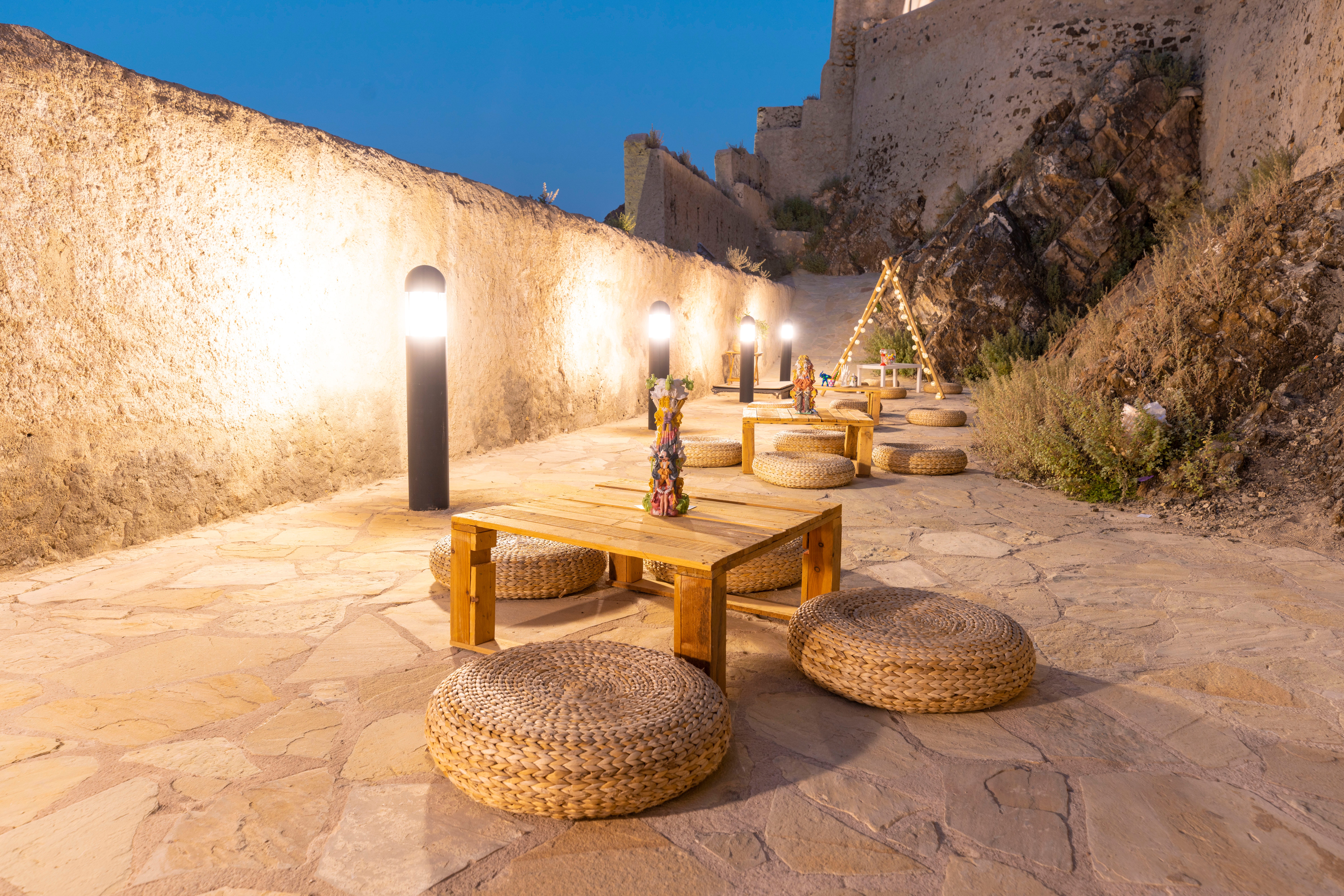
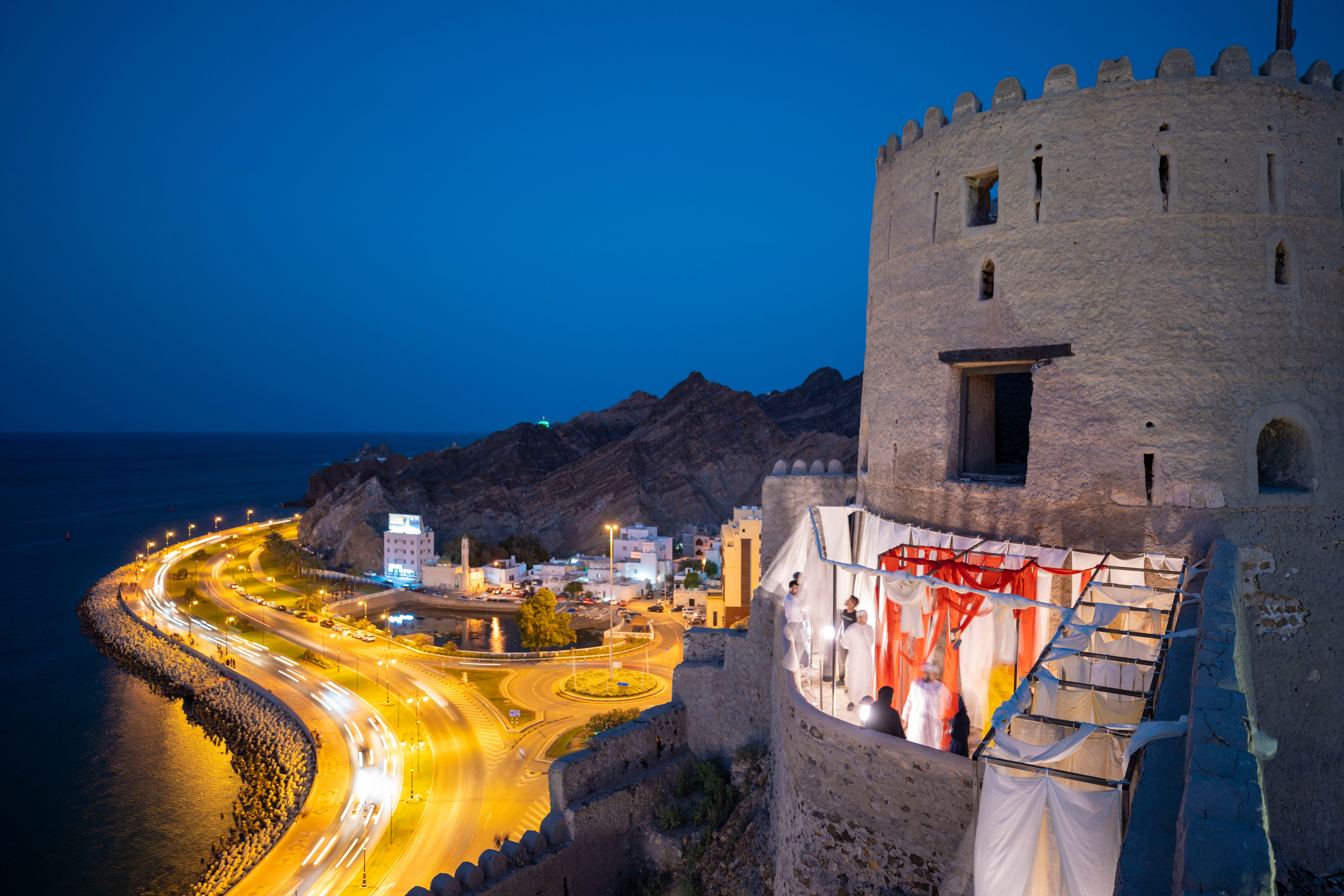
Muttrah: Muttrah is a recurring setting in Omani novels, short stories and poems. A walk through the vibrant Muttrah Souq, Muttrah’s old neighborhoods, all way the up the many steps leading to the over 400-year-old Muttrah Fort, which overlooks the Gulf of Oman, will not only give readers the opportunity to walk in the pages of some of their favorite literary works, but it will also inspire writers. There is a café in Muttrah Fort, where writers can sit, reflect and write while taking in the view.
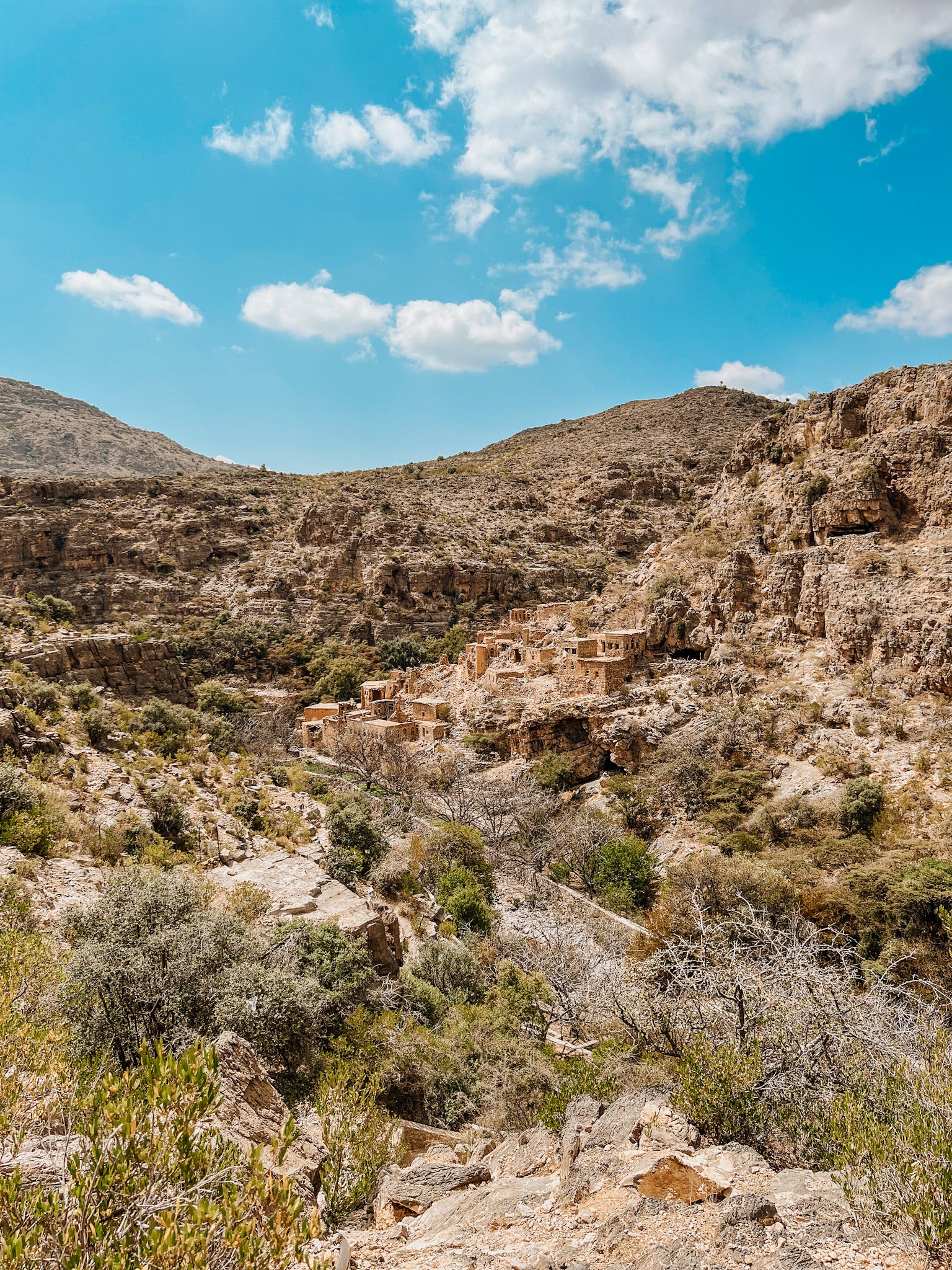
Al-Jabal al-Akhdar: al-Jabal al-Akhdar (The Green Mountain), part of Oman’s Hajar Mountains, features in numerous Omani literary works. It is known for its historic significance as the site of the al-Jabal al-Akhdar War. Its enduring presence in fiction in particular reflects its strong imprint on the literary imagination. Hiking across the mountain’s terrain, which rises over 2,000 meters above sea level, and through its restored old villages, such as al-Shuraijah and al-Suwgra, will allow visitors to step back into history and give them a glimpse into the resilient communities that have long called this area home. Once there, visitors will notice locals and tourists alike journaling and writing, making it a place of contemplation and inspiration.
Get to Know Omani Literature: Outstanding Translated Works
Bitter Orange Tree by Jokha Alharthi: Alharthi is an award-winning Omani author and academic who became known internationally when, in 2019, she won the Man Booker International Prize with Marilyn Booth for the English translation of her Arabic novel Sayyidat al-Qamar (Celestial Bodies). Alharthi was the first Arab author to win the coveted prize, bringing unprecedented global attention to Omani literature and generating wider interest in it. Following Celestial Bodies, her novels Narenjah and Hareer al-Ghazalah, were also translated into English by Booth and published under the titles Bitter Orange Tree and Silken Gazelles, respectively. I have read all three of the critically acclaimed works, and while Celestial Bodies remains the book I recommend the most to those reading for Alharthi for the first time, I have a soft spot for Bitter Orange Tree, which was longlisted for the Dublin Literary Award. It follows the story of Zuhoor, an Omani student studying abroad in the United Kingdom, who gets pulled into the past as she tries to adjust to her newfound life abroad. She especially lingers on memories of Bint Amer, an old woman who was like a grandmother to her and who died shortly before she left Oman. “My spirit was burning, consumed by my human helplessness, the impossibility of regaining or restoring just one moment from the past,” Zuhoor poignantly describes in the novel. As the story unfolds, fragments of Bint Amer’s troubled past and Zuhoor’s inner struggles are gradually revealed, drawing readers into a dreamlike, poetic atmosphere, where an old bitter orange tree plays a key role.
Honey Hunger by Zahran Alqasimi: Alqasimi is an award-winning Omani author and poet who has published over a dozen literary works. In 2023, he became the first Omani national to win the International Prize for Arabic Fiction for his novel Taghrebat al-Qafir (The Exile of the Water Diviner). In 2025, his novel Ju’ al-Asal, which was translated into English by Marilyn Booth, was published by Hoopoe, an imprint of the American University of Cairo Press, under the title Honey Hunger. The novel centers on Azzan, a beekeeper in rural Oman, who tenderly cares for his bees while navigating personal challenges. Throughout the story, he encounters a range of characters, through whom the novel explores literal and metaphorical forms of hunger. Booth’s translation of the novel is lyrical, effortlessly transporting readers to the country’s majestic mountains, and immersing them in a richly imagined world of bees, nature, and man skillfully crafted by Alqasimi. Booth’s translation won the Saif Ghobash Banipal Prize earlier this year.
I Saw Her in My Dreams by Huda Hamed: Hamed is an Omani author and journalist best known for third novel, Cinderellat Muscat. I prefer her second novel, I Saw Her in My Dreams, however. The novel follows Zahiyya, an Omani visual artist with OCD, and Faneesh, her newly hired Ethiopian domestic worker. When Zahiyya’s husband leaves for Zanzibar in search of the mother he was snatched away from in infancy, the two women are left in a house alone and their lives become unsettled by a shared recurring nightmare, which prompts Zahiyya to personally investigate the mysterious Faneesh. The novel weaves multiple stories —Zahiyya’s, her husband’s and Faneesh’s — together, bringing refreshing honesty to the persistence of racism among some in the Arab region. It also draws attention to the intertwined history of Oman and Zanzibar. I Saw Her in My Dreams was translated to English by Nadine Sinno and William Taggart, and published by the University of Texas Press in 2023.
Sharifah Alhinai is a writer, cultural advisor and curator, and the founder of Sekka and the Khaleeji Art Museum. She is a graduate of the University of Oxford and The School of Oriental and African Studies, the recipient of the Arab Woman Award 2020 and the Young Arab Pioneer Award 2024. In 2023, she was also recognized in Forbes Middle East’s 30 Under 30 List. For more information about her, visit sharifahalhinai.com.